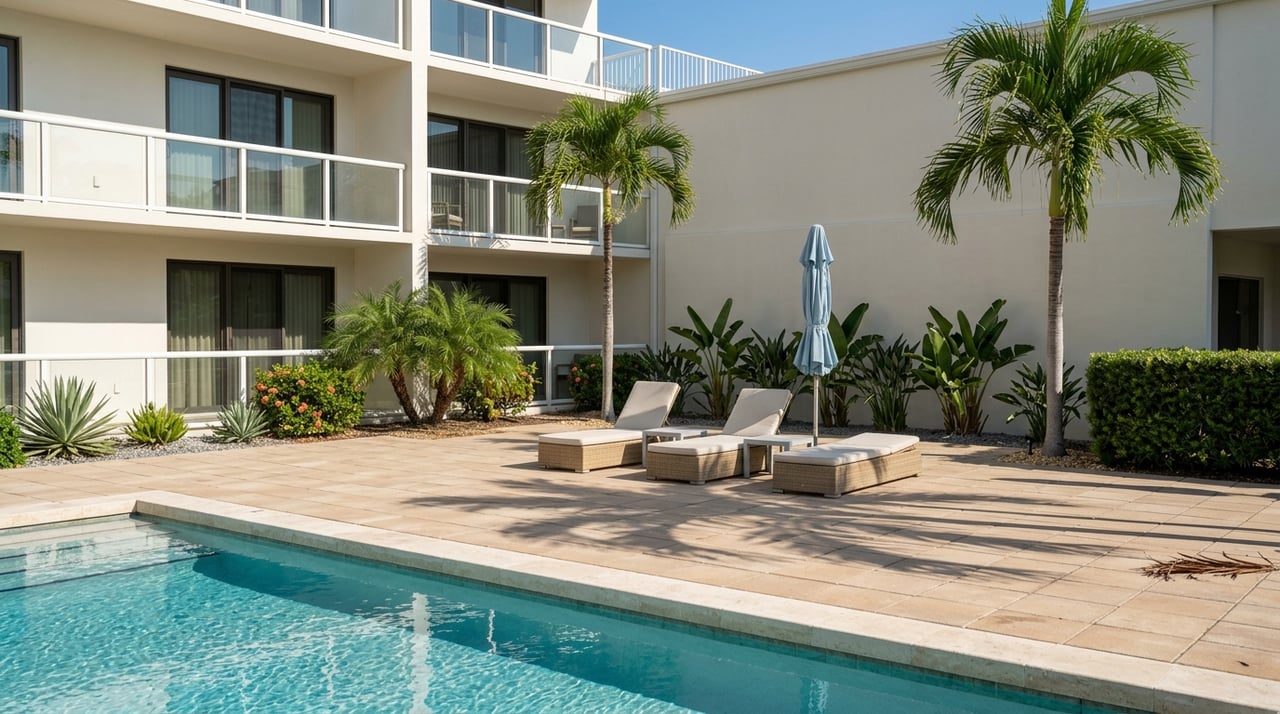
Ever find yourself daydreaming about walking to the beach, skipping yardwork, and having a home base that feels simple to lock up and leave? If you are weighing condo living in Clearwater, you are probably trying to balance lifestyle, budget, and peace of mind all at once. The good news is that Clearwater condos can be a great fit for the right buyer, especially if you understand the tradeoffs before you buy. Let’s dive in.
Why Clearwater Condo Living Appeals
Clearwater offers a lifestyle that draws many buyers to condos in the first place. Clearwater Beach sits on a barrier island west of downtown Clearwater, with about 3 miles of beach, warm Gulf waters, year-round lifeguards, and a walkable area with restaurants and shops nearby.
For many buyers, that setting creates a practical day-to-day lifestyle. You may be able to spend more time enjoying the coast and less time handling exterior upkeep, lawn care, or larger property maintenance. If you travel often or want a seasonal home, that convenience can be a major plus.
Clearwater Beach is also a short drive from Tampa International Airport, according to Visit St. Pete-Clearwater. That matters if you split time between homes, host out-of-town guests, or simply want easier travel access.
What Condo Ownership Means
Condo ownership in Florida is different from owning a detached home. Under Florida law, the association is responsible for maintaining, repairing, and replacing the condominium property and common elements assigned to it in the declaration.
That usually means you are not personally handling many exterior maintenance tasks tied to shared areas or building systems. At the same time, you are still responsible for items not assigned to the association, and Florida’s condo budget disclosure rules specifically exclude interior maintenance of the unit from association-obligation expenses.
In simple terms, condo living often means less day-to-day exterior responsibility, but also less individual control over how certain property issues are handled. The association may also have an irrevocable right of access to your unit during reasonable hours when maintenance, repair, replacement, or damage prevention requires it.
Who Condo Living Fits Best
A Clearwater condo may be a strong fit if you want a home that supports a lower-maintenance lifestyle. This often appeals to downsizers, part-time residents, relocation buyers, and anyone who values beach access and shared amenities more than having a yard.
It can also work well if you like the idea of living near restaurants, shops, and public beach access in a more walkable setting. If your goal is convenience and simplicity, condo ownership may line up well with that lifestyle.
On the other hand, condo living may be a weaker fit if you want maximum autonomy. If having a yard, fewer community rules, or more control over the property is important to you, a single-family home or another property type may feel like a better match.
What Monthly Condo Fees Cover
One of the biggest questions buyers ask is what the monthly condo fee actually includes. In Florida, common expenses are collected through assessments based on the declaration, and state law defines common expenses broadly to include operation, maintenance, repair, replacement, or protection of the common elements and association property.
Monthly dues usually help fund:
- Administration
- Management fees
- Maintenance
- Insurance
- Security
- Operating capital
- Reserves
It is also important to know what those fees may not include. Florida disclosure language notes that some unit-level costs, including interior maintenance and certain utilities billed directly to the owner, are not part of association expenses.
That means a condo fee should never be viewed as your entire housing cost. You still need to understand what you will pay separately for the interior of the unit and any owner-specific insurance coverage.
Why Reserves Matter So Much
In Clearwater, reserve funding can have a real impact on your ownership experience. For residential buildings that are three habitable stories or higher, Florida law requires a structural integrity reserve study at least every 10 years.
That study must cover key building components such as the roof, structure, fireproofing and fire protection systems, plumbing, electrical systems, waterproofing and exterior painting, and windows and exterior doors. Associations that existed on or before July 1, 2022, and were controlled by unit owners were required to complete the first study by December 31, 2025, with limited timing coordination allowed in some milestone inspection situations.
For you as a buyer, this matters because reserve funding and repair planning can affect monthly costs and long-term predictability. A building with major upcoming work, underfunded reserves, or an active special assessment may create a very different ownership picture than one with stronger financial planning.
Clearwater Flood and Insurance Questions
In a coastal market like Clearwater, flood exposure deserves close attention. The City of Clearwater says its flood map provides parcel-specific flood and elevation data, and the city also makes clear that flood zones and evacuation zones are not the same thing.
The city urges residents to determine their flood risk and purchase flood insurance. That makes flood due diligence especially important when you are evaluating a condo near the coast or in a lower-lying area.
You will also want to clarify what the association’s master insurance policy covers and what you will need to insure separately as the unit owner. That question is too important to leave vague, especially in a hurricane-prone coastal area.
Rules Can Shape Daily Life
Many buyers focus first on views, amenities, and price, but the governing documents can affect your experience just as much. Florida law and DBPR guidance make clear that condos can regulate transfers, leasing, use of common elements, and whether tenants and owners can use the property at the same time.
The declaration can also assign hurricane-protection responsibilities to either the association or the unit owner. That means details like storm shutters, windows, leasing timelines, and use policies may vary by building.
Rule enforcement is another factor to understand. A condominium association may levy fines for violations of the declaration, bylaws, or reasonable rules, with a $100 per violation cap and a $1,000 aggregate cap for the violation. The association may also suspend certain use rights for rule violations or assessment delinquencies over 90 days, although that suspension does not extend to certain access items such as parking spaces or elevators.
Fees Beyond Monthly Dues
Your budget should also include transaction-related charges that can come up during the purchase process. Florida allows a transfer fee for a sale, lease, or other transfer if the condominium documents authorize association approval and the fee.
The maximum transfer fee is $150 per applicant, with some household combinations treated as one applicant. Estoppel certificate fees are also allowed and may be as high as $250 if no delinquent amount is owed, with additional amounts allowed for expedited or delinquent situations.
These are not always the largest costs in a transaction, but they are still worth planning for. Understanding them upfront can help you avoid surprises near closing.
Questions To Ask Before Buying
Before you move forward on a Clearwater condo, ask questions that help you understand both the lifestyle and the financial picture. A beautiful unit in the right location still needs to make sense on paper.
Here are some of the most important questions to ask:
- What does the monthly condo fee cover?
- Are reserves fully funded?
- Is there a current or upcoming special assessment?
- Has the building completed any required milestone inspection or structural integrity reserve study?
- What do the declaration and rules say about rentals, pets, parking, remodeling, and hurricane protection?
- What does the master insurance policy cover?
- What insurance will you need separately as the owner?
- What is the property’s flood profile?
These questions can help you compare buildings more clearly. They can also reveal whether a condo that looks ideal at first glance is truly the right fit for your goals.
The Bottom Line On Clearwater Condos
Clearwater condo living is often a great match if you value beach access, travel convenience, shared amenities, and less exterior-maintenance responsibility. It can be especially appealing if you want a simpler lifestyle or a home that is easier to leave for part of the year.
At the same time, condo ownership comes with monthly dues, association rules, and the potential for reserve-driven costs or special assessments. The right fit depends on how comfortable you are with that tradeoff.
If you are thinking about buying a condo in Clearwater, the most helpful next step is to look beyond the listing photos and study the building itself. If you want calm, honest guidance as you weigh your options, Danna Goss is here to help you find the right fit for your lifestyle and your next move.
FAQs
What does a Clearwater condo fee usually cover?
- Monthly condo dues usually help cover administration, management fees, maintenance, insurance, security, operating capital, and reserves, but some unit-level costs like interior maintenance and certain utilities may still be your responsibility.
What should you review before buying a condo in Clearwater?
- You should review the condo declaration, rules, budget, reserve funding, any current special assessments, required inspections or reserve studies, insurance details, and the property’s flood profile.
Why do reserve studies matter for Clearwater condo buyers?
- Reserve studies matter because they help show how a building is planning for major repairs and replacements, which can affect monthly costs, special assessments, and your long-term ownership experience.
Are flood zones important when buying a Clearwater condo?
- Yes, flood zones are important because the City of Clearwater says buyers should determine flood risk, understand that flood zones and evacuation zones are different, and consider flood insurance.
How do condo rules affect daily life in Clearwater?
- Condo rules can affect leasing, use of common elements, parking, remodeling, hurricane-protection responsibilities, and other day-to-day ownership issues, so it is important to read the governing documents carefully.