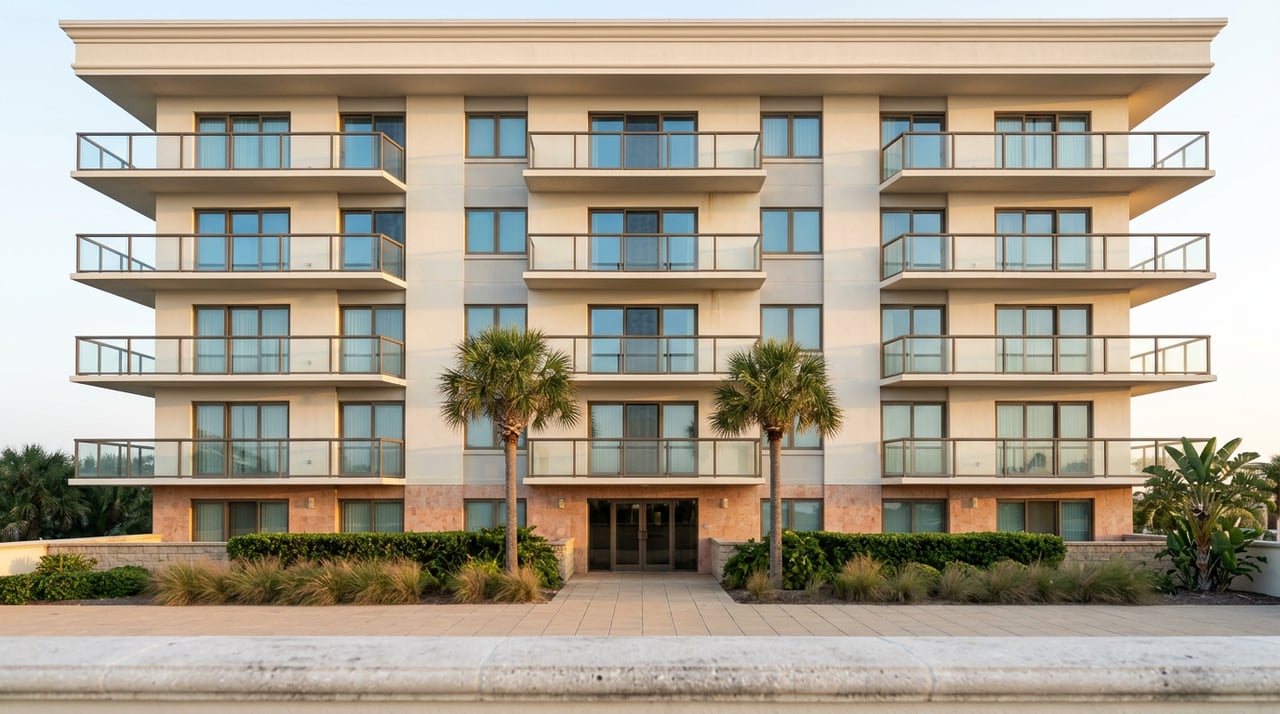
In May 2025, residents of a 12-story, 140-unit condo building on Sand Key were told to pack a bag and leave. Workers doing routine garage repairs at South Beach III Condominium, at 1460 Gulf Boulevard, had found major cracks and voids in a support column. The building, put up in the 1970s, sat empty for days while engineers stabilized the structure and cleared residents to retrieve belongings.
Here's the part that should stop any Clearwater condo buyer or seller mid-scroll. That building had already passed its milestone inspection. The engineering firm Karins Engineering issued Phase 1 reports in August and September of 2024 and found nothing that compromised the building's safety. The reports sat with the condo association for months before the city of Clearwater confirmed it had them on file, and by the time crews were back in that garage doing separate repair work eight months later, they found the kind of structural damage the visual inspection hadn't caught.
The Paperwork Said the Building Was Fine
This is not a story about an inspection that was skipped or a board that cut corners. The Phase 1 report existed, the engineer signed it, and it said the building was sound. What it could not do was guarantee that a support column buried in a parking garage would still look the same eight months later, once a different repair crew started pulling things apart.
That gap between "inspected" and "still fine right now" is the thing most milestone inspection explainers skip past. They walk you through the statute, the deadlines, the phases, and stop there, as if a passed inspection closes the file. In a market like Clearwater, where a meaningful share of the condo stock predates 1990, it doesn't close anything. It's a snapshot, and buildings keep aging after the photo is taken.
Two Different Documents, Two Different Questions
Part of the confusion buyers run into is that Florida actually requires two separate things, and they answer two separate questions.
| Milestone Inspection | Structural Integrity Reserve Study (SIRS) | |
|---|---|---|
| Question it answers | Is the building structurally sound right now | Is enough money being saved to fix what will eventually need it |
| Who performs it | Licensed engineer or architect | Engineer, architect, or certified reserve specialist |
| How often | Every 10 years, starting at the age trigger | Every 10 years after the building's creation |
| Age trigger | 30 years inland, 25 years for coastal buildings | Not age-based, triggered by building height (3+ habitable stories) |
| If it's missing or fails | Local building official can order evacuation, condemnation, or fines | Association can't legally waive reserve funding, and insurers may deny coverage |
A building can have a clean milestone inspection and a badly underfunded SIRS at the same time. It can also be brand new and still need a SIRS on file, since that requirement is tied to height, not age. Asking only "did it pass inspection" gets you half the picture.
The Deadlines That Already Passed
As of today, the second half of that picture is no longer optional. The deadline for existing owner-controlled associations to complete their initial SIRS was December 31, 2025. Starting January 1, 2026, any association whose budget was adopted on or after January 1, 2025 can no longer vote to waive or underfund reserves for the structural components the SIRS identifies. Both of those dates are behind us.
House Bill 913, signed in Clearwater in June 2025, also gave associations a narrow tool to manage the shock: a board that completed a milestone inspection identifying necessary repairs can pause reserve contributions for up to two consecutive budget years to redirect that money toward the actual fix. It's worth knowing this exists, because it means a healthy-looking reserve line in an association's budget isn't automatically a red flag. Sometimes it's a board using the tool the legislature gave them.
The other change that matters at closing: as of January 1, 2026, any condo association with 25 or more units has to post its governing documents, budgets, and reserve studies to a website or app under House Bill 1021. That's a direct response to exactly the kind of gap that showed up at South Beach III, where the inspection report existed on paper for months before the city had a confirmed copy. If you're touring a Clearwater building this fall, that information should be sitting online right now, not buried in a filing cabinet at the property manager's office.
Why Clearwater Feels This First
Florida's statute sets the milestone inspection trigger at 30 years for most buildings, but drops it to 25 years for buildings within three miles of a coastline where local building officials require the earlier timeline. Most of Clearwater Beach and Sand Key sits inside that three-mile band. Combine an older beachfront building stock with a shorter runway to the first mandatory inspection, and Clearwater's condo towers hit these requirements sooner than a comparable building fifteen miles inland would.
In May 2025, the same week South Beach III was evacuated, a city spokesperson told local reporters that close to a quarter of Clearwater's condo buildings hadn't yet filed their required milestone inspection reports. That's not a number about deteriorating buildings. It's a number about paperwork lagging behind a fast-moving law, and while there's no more recent citywide count to point to, the gap it describes is exactly the kind that closes slowly, which means a buyer touring an older Clearwater condo this year should still expect to run into a building that's behind on documentation.
The inspection report is a fact about the day it was written. The reserve schedule is the fact that follows you into the next decade.
What to Actually Ask For, If You're Buying
The three-day document review period that comes with a Florida condo contract exists, but attorneys who work these deals regularly point out it's a tight window to absorb board minutes, a financial statement, and a structural report all at once. A few things worth doing before you're staring down that clock:
- Ask for the current SIRS and milestone inspection report before you write an offer, not after. If the association has 25 or more units, this should already be posted online under the 2026 transparency rule.
- Read board meeting minutes from the past twelve months, not just the current budget. Assessment conversations often show up there before they show up in a formal notice.
- Ask directly whether the association has paused reserve contributions under the HB 913 provision, and if so, why.
- If the building is approaching its 25 or 30 year mark and hasn't been inspected yet, ask when the notice is expected and build that timeline into your decision.
- Consider negotiating a longer inspection or document review period than the statutory minimum, especially on an older building. A few extra days to actually read what you're requesting is a small ask compared to what a missed detail can cost.
What This Means If You're Selling
If your building has a pending special assessment, expect it to come up in conversation before an offer ever gets written. Florida law requires this kind of financial obligation to be disclosed, and lenders increasingly condition mortgage approval on the building's inspection and reserve status, not just the buyer's qualifications. A unit with a documented, funded plan behind it tends to move differently than one where the paperwork raises more questions than it answers.
This is where a patient, document-first approach helps most, particularly for downsizing sellers who may be moving out of a condo they've owned for decades and aren't used to this level of building-level scrutiny. Getting ahead of the SIRS, the meeting minutes, and any assessment history before listing, rather than fielding those questions mid-contract, tends to keep a sale on schedule.
A quick note before the FAQ: this is a general walkthrough of how the law currently works, not legal or financial advice for your specific building. A real estate attorney or your closing agent should confirm how any of this applies to a contract you're actually signing.
A Few Questions Worth Settling Upfront
Does any of this apply to a single-family home in Clearwater? No. The milestone inspection and SIRS requirements apply to condominiums and cooperatives three or more habitable stories in height. Single-family homes, duplexes, triplexes, and four-unit buildings of three or fewer habitable stories are exempt.
My building is only a few years old. Do I still need to worry about this? The SIRS requirement is triggered by height, not age, so even a condo finished this year needs one on file. The milestone inspection age trigger won't apply for decades, but the reserve study obligation is already in place.
If a building passed its milestone inspection, does that mean no special assessment is coming? Not on its own. The inspection and the reserve study answer different questions. A building can pass its structural inspection and still be facing a significant assessment if its reserves haven't kept pace with what the SIRS says it needs to save.
Buying or selling a Clearwater condo right now means reading two documents, not one, and reading them before the clock on your review period starts running. If you're weighing a purchase or a sale in Clearwater, Sand Key, or anywhere along the Tampa Bay coast and want a second set of eyes on what a building's paperwork is actually telling you, The Goss Group is here to help you sort it out before it becomes a surprise at the closing table.